just volleyball Rules and Match Settings Guide
Complete rules, scoring, deuce thresholds, custom lobby settings, match modifiers, stages, and balls in just volleyball.
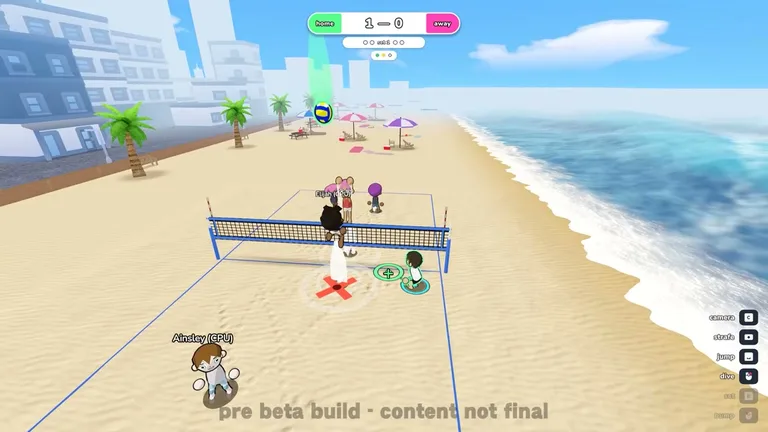
Competitive play in just volleyball follows arcade net regulations alongside deep lobby customization. Review our specialized breakdowns on rules and faults and multiplayer and formats for focused gameplay analysis.
Table of contents
- Scoring and set structure
- Serve regulations and timing
- Complete faults and violations
- Rotation and court positioning
- Custom lobbies and match modifiers
- Court stages and environments
- Match ball models and stage assignments
- Match settings summary
Scoring and Set Structure
Every default match establishes points per set at 7 to maintain brisk rally pacing. Securing victory requires sets to win fixed at 2 across standard tournament play. Under default conditions, matches are played as a best of 3 sets to 7 points to determine the winner. The engine activates a mandatory side switch so teams alternate court halves following each completed frame.
When tied just before set completion at six-all in standard 7 points play, a set enters deuce and requires a two-point lead under the win by two rule. Resolving a deuce mandates that a squad secure two points consecutively to close out the round.
By default, the tie break modifier is active to resolve extended deuces. In standard 7 points sets, the engine caps extended deuces after 4 additional points. Once tied at eleven-all after the 4 added points, the announcer calls tie break and the next point wins the set immediately without requiring a two-point margin.
Read our detailed breakdown on what is a deuce and explore the rules database for underlying parameter indices.
Serve Regulations and Timing
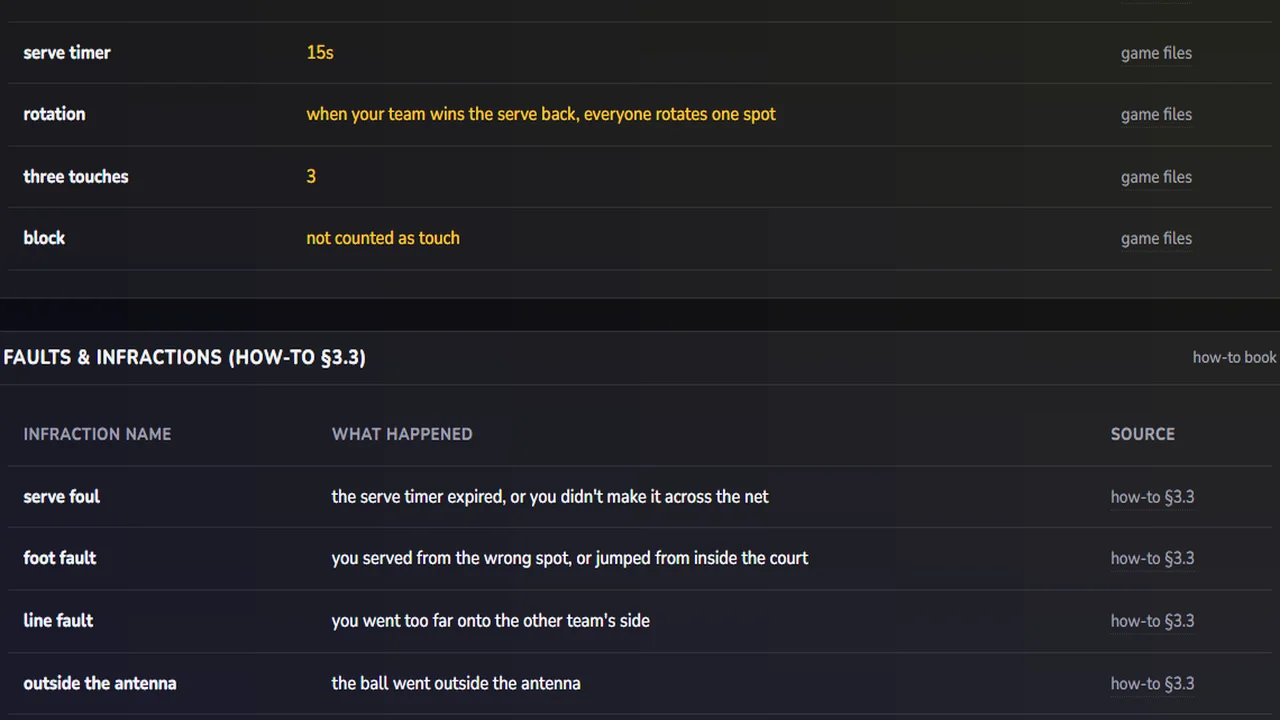
The server must initiate each rally within the active serve timer limit of 15s before incurring a violation. All serves must originate from the designated service zone positioned directly behind the court back line. When executing a jump serve, athletes may toss the ball beyond the baseline as long as they take off before stepping on the court floor.
A simple standard serve focuses primarily on delivering the ball safely over the net. Deploying a high-velocity jump serve yields maximum striking power at the expense of greater execution risk. Utilizing a deceptive jump floater disrupts defensive structures by catching receiving athletes off guard.
Check our guide on how long to serve for countdown strategies and baseline positioning tips.
Complete Faults and Violations
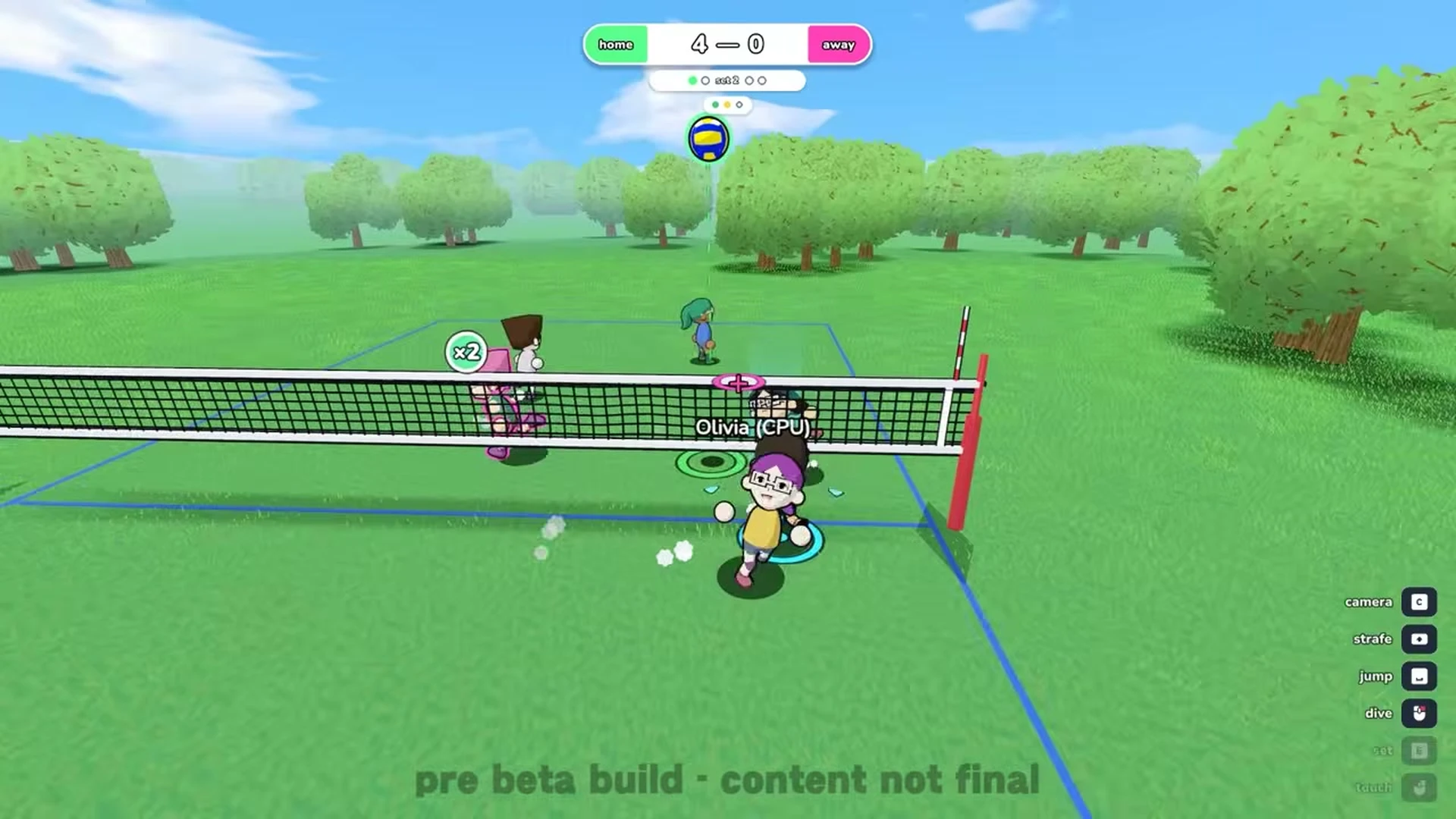
Failing to get the ball over the net or letting the timer run out results in an immediate serve foul. A foot fault is called when a server initiates contact from the wrong location or leaps from within court lines. Stepping too far across the boundary onto the opponent half triggers a line fault. Striking the ball so it travels laterally beyond the posts incurs an outside the antenna infraction. Attempting to spike, tip, or contest an incoming serve directly results in an illegal attack on serve penalty.
Each side operates under a limit of three touches before sending the ball back across the net. Surpassing the contact threshold produces a four touches call against the offending team. A defensive block at the net is not counted as touch against the squad contact tally. During general team play, the rules forbid a single player from contacting the ball twice in a row.
Consult our comprehensive analysis in every fault explained to avoid common whistle infractions.
Rotation and Court Positioning
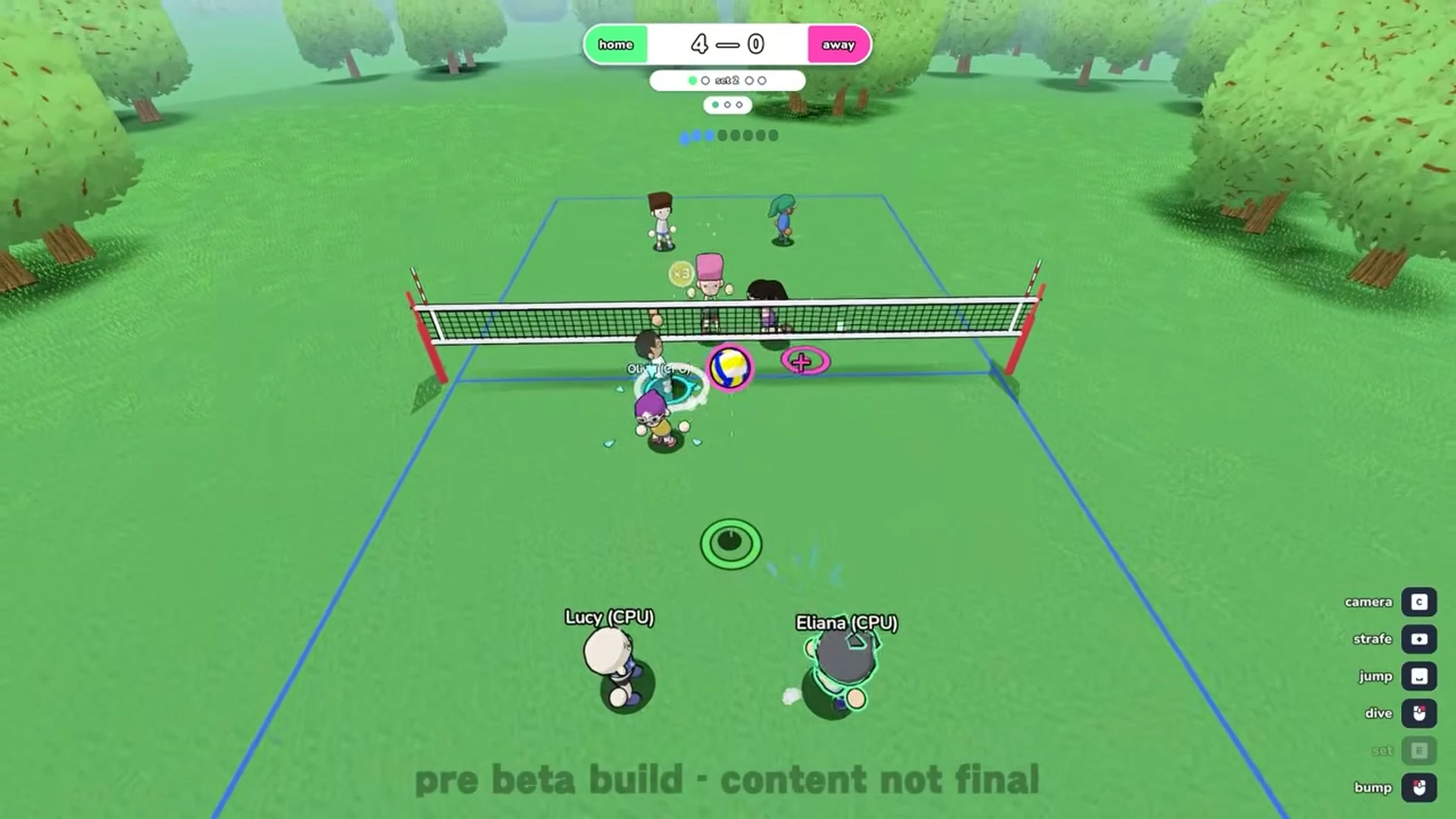
Standard court movement requires that everyone shifts one position whenever your team wins the serve back. Executing proper rotation keeps player formations balanced across front and back court zones.
Beyond standard six on six matches, lobbies support two on two team play along with four on four configurations. In solo one on one matches, an athlete is permitted to touch the ball three times personally due to having no teammates.
Learn more about team contact dynamics in our guide covering how many touches in a rally.
Custom Lobbies and Match Modifiers
The stamina expenditure rate is managed by  sweat, which toggles between off, normal, fast, and chaos. Physical bumping between friendly teammates remains active unless disabled via the team collision toggle. Automated camera recaps of spectacular spikes are governed by the instant replays setting. On-screen landing markers and action rings display by default under the ball indicators modifier.
Match organizers can restrict spontaneous roster changes before serve by enabling lock teams. Enforcing rotate every point forces players to shift court spots after every rally regardless of which side scored. Automated roster management is controlled through cpu fill, supporting all, home, away, none, and manual modes. Match startup animations play before the opening serve unless shortened by the intro sequence setting. Deciding sets utilize special format conditions when the tie break setting is left enabled.
Explore our companion articles on what match modifiers exist, offline CPU play, and online lobbies for multiplayer setup tips. Browse the complete match modifiers database to inspect underlying script sources.
Court Stages and Environments
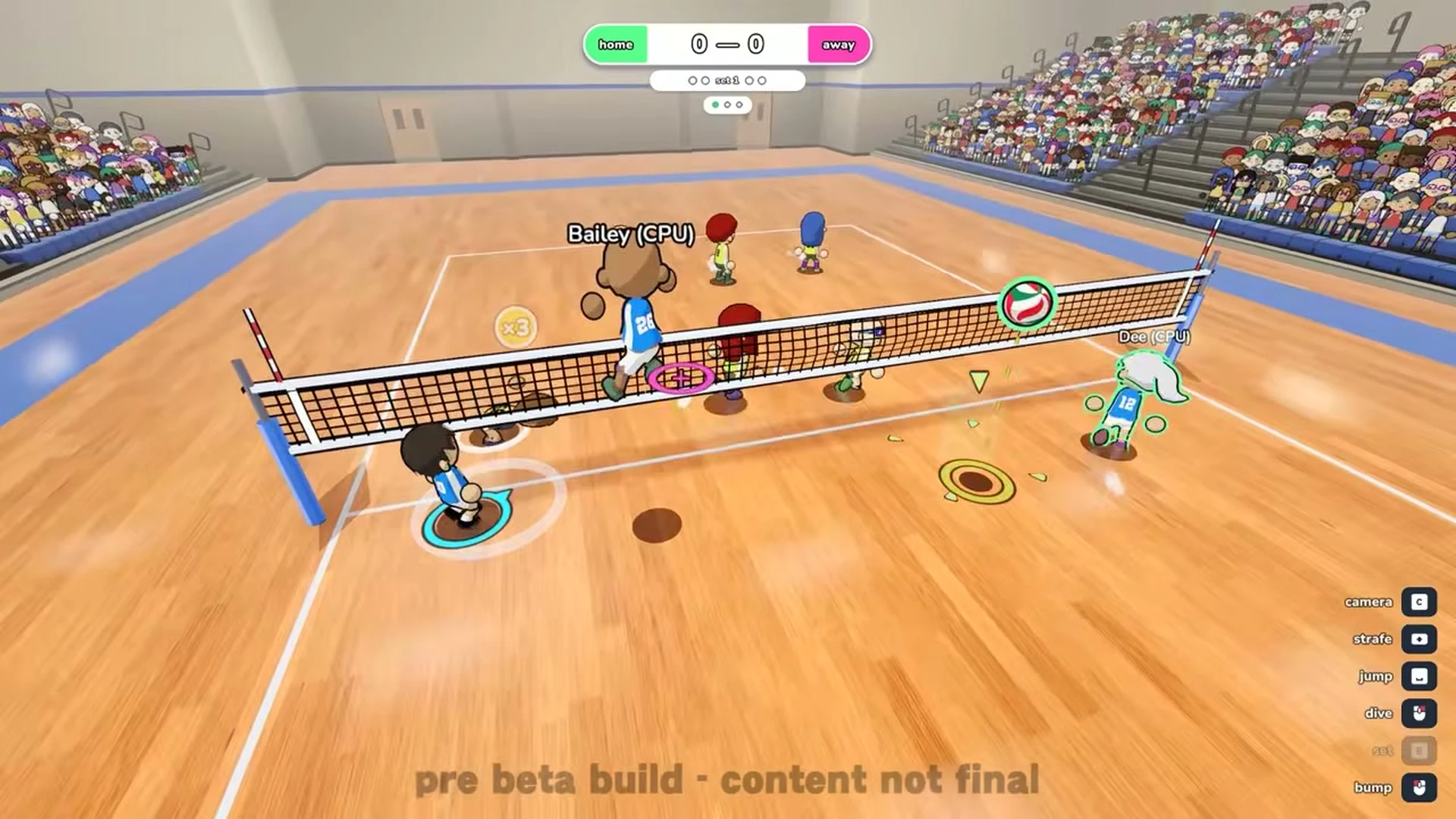
Standard indoor competition takes place inside the grand Nationals Arena facility. Athletes can also practice standard indoor fundamentals across the classic hardwood floor of School Gym.
Surreal dream aesthetic stages transport competition high above the sky in Clouds. Extraterrestrial matches unfold against the cosmic void of Outer Space. Novice athletes learn essential movement mechanics within the dedicated Tutorial arena.
Outdoor recreational matches take athletes to coastal sands on the sunny Beach court. Players can also enjoy open-air lawn play across the painted lines of Grass Court. Specialized club training environments include the historic Japanese-styled venue known as Crow Gym.
See our full overview on what stages are in the game and inspect the stages database for camera views.
Match Ball Models and Stage Assignments
The premier pro match ball serves as the regulation model across national tournament stages. The standard school ball model is equipped across secondary gymnasiums including School Gym. The rugged outdoor ball model is selected for open-air environments and dream arenas.
Inspect the full asset index in our balls database to view model textures.
Match Settings Summary
| Parameter or modifier | Default setting | Options and values | Reference guide link | | points per set | 7 | 7 points | what is a deuce | | sets to win | 2 | 2 sets | what is a deuce | | win by two | true | true or false | what is a deuce | | side switch | true | true or false | what is a deuce | | serve timer | 15s | 15s, 20s, 30s, 45s, 60s | how long to serve | | sweat | off | off, normal, fast, chaos | what match modifiers exist | | team collision | true | true or false | what match modifiers exist | | instant replays | true | true or false | what match modifiers exist | | ball indicators | true | true or false | what match modifiers exist | | lock teams | false | true or false | what match modifiers exist | | rotate every point | false | true or false | what match modifiers exist | | cpu fill | all | all, home, away, none, manual | offline CPU play | | intro sequence | true | true or false | what match modifiers exist | | tie break | true | true or false, caps deuce where next point wins set | what is a deuce |