just volleyball Rules, Scoring, and Faults: Court Boundaries and Deuce
Master match scoring, deuce rules, court boundaries, and line faults in just volleyball.
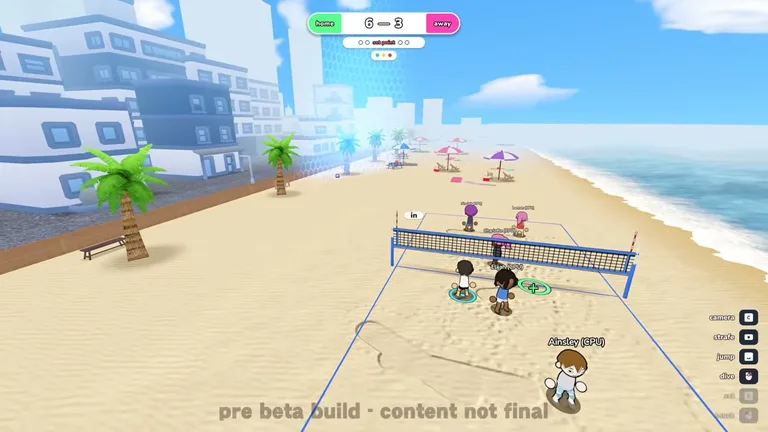
Players should review beginner fundamentals and three touch rules to build solid court awareness. For complete match regulations, lobby modifiers, and court stages, read our rules and match settings guide.
Touch Rules and Rally Flow
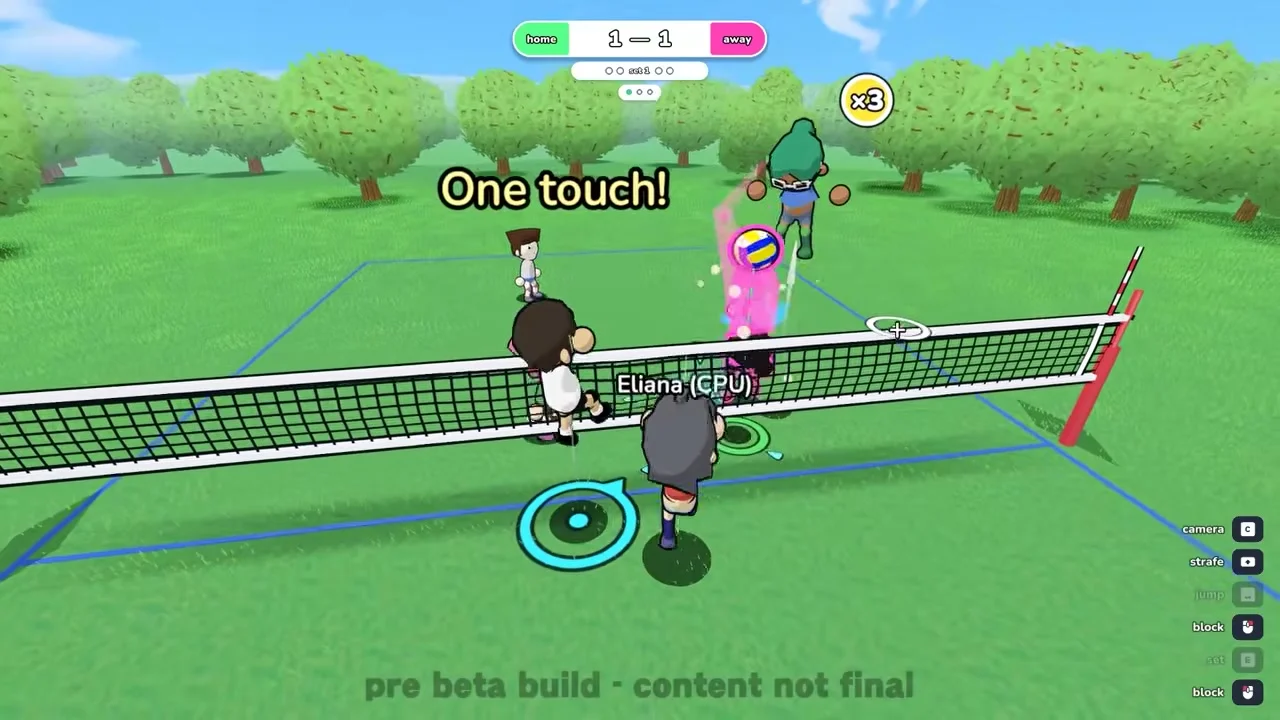
During a standard rally, a squad can make at most three contacts before sending the ball over the net. Executing a block at the net does not count against your team touch limit. Individual teammates cannot strike the ball two consecutive times during general play. In solo one on one matches, a lone player is permitted three personal touches because no partner shares the court.
Match Scoring, Sets, and Deuce Rules
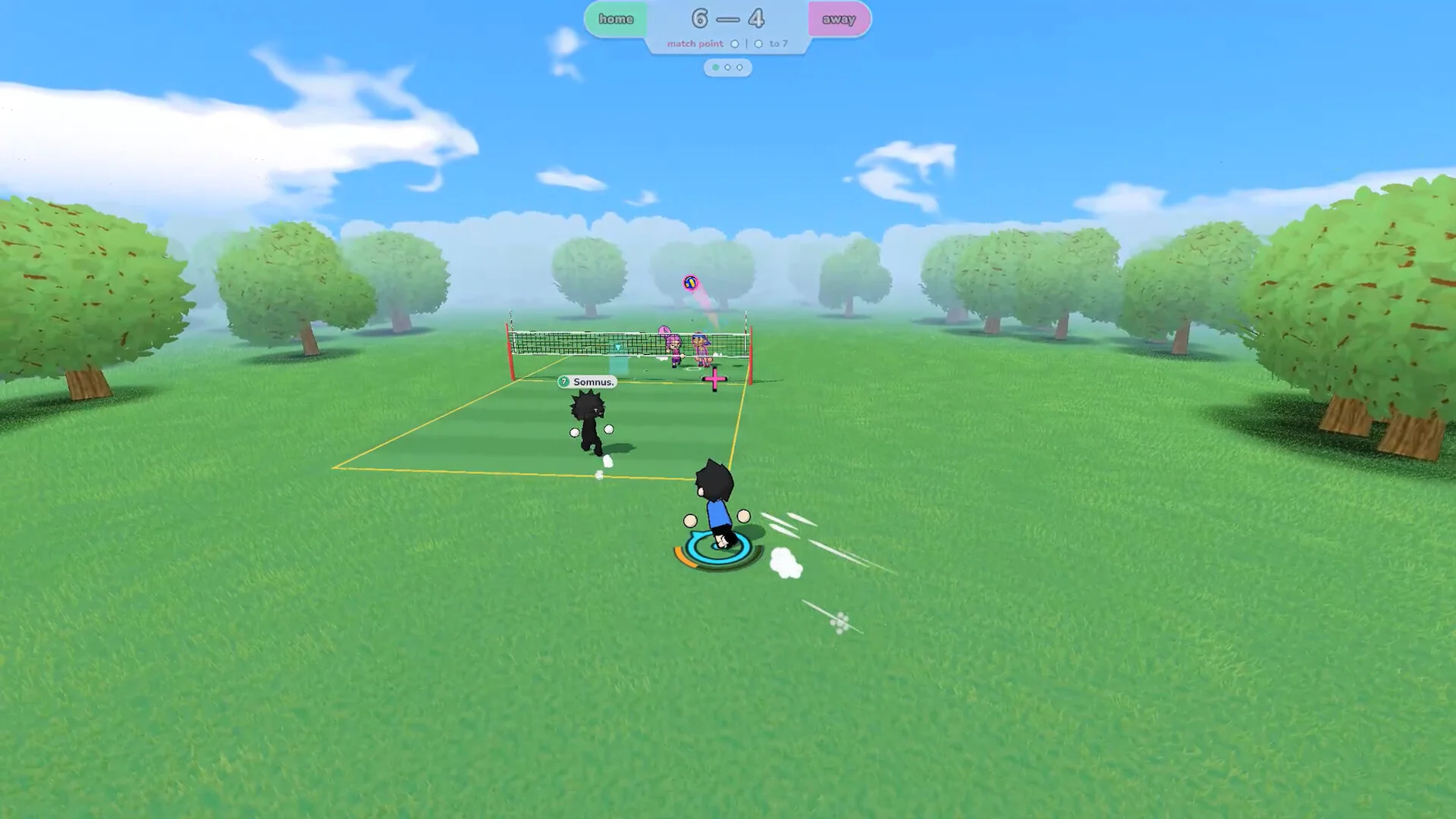
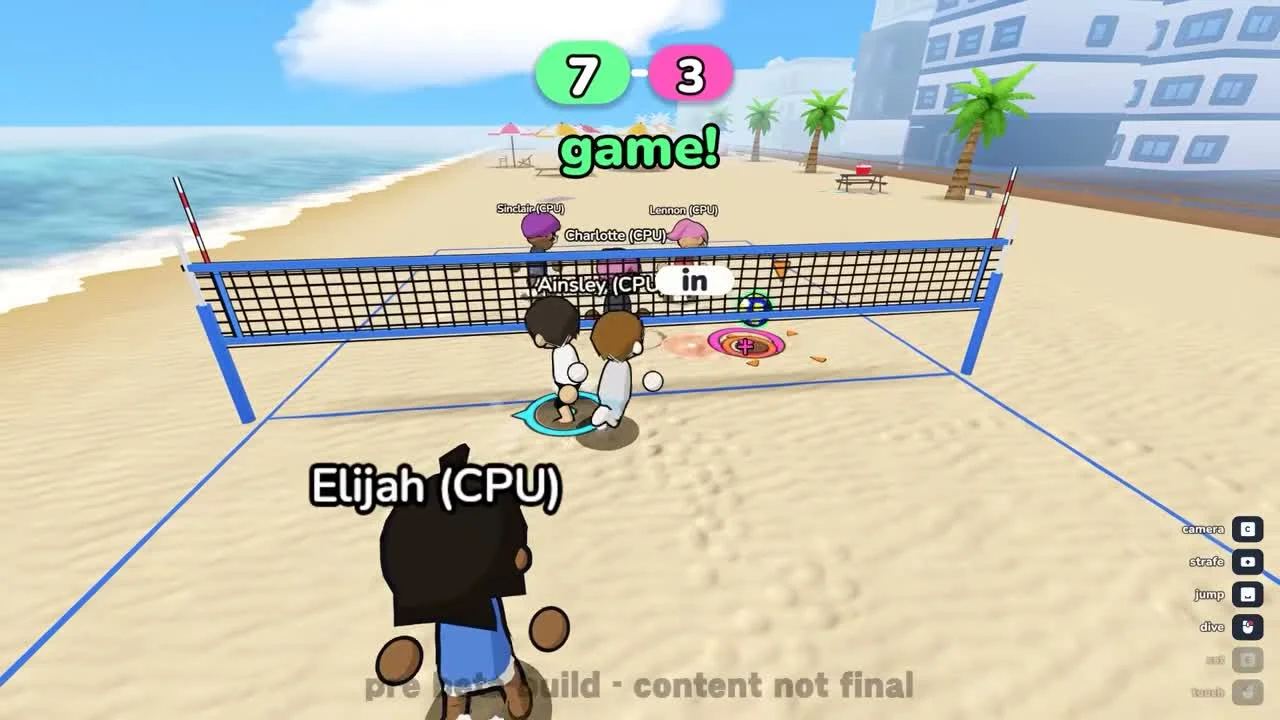
Standard competition follows a best of 3 format where games are decided at 7 points. Teams swap opposite ends of the arena after finishing each individual set. If both sides reach equal tallies right before set completion, a deuce phase begins. During a deuce, play continues until one squad establishes a lead of two consecutive points.
Default competition activates the tie break modifier to cap runaway deuce rallies. The engine limits prolonged play by triggering a tie break after 4 additional points. Once active, the next point decides the winner immediately. Custom lobby hosts can adjust point limits or activate gameplay modifiers, as detailed in our guide on custom lobbies and match modifiers.
Serving Rules and Court Rotation
The server has a fixed window of 15 seconds to put the ball in play from behind the baseline. The underlying game logic enforces this countdown through a constant limit of 15 seconds. Players attempting an aerial attack can toss past the boundary, provided they leap into the air before touching the court surface. When regaining possession, all squad members rotate one position, and you can practice mechanics in jump serve timing and rotation. Defenders cannot spike, block, or tip an incoming serve, and must always execute a clean receive.
Court Boundaries and Net Dimensions
Standard matches set the central barrier at a physical height of 2.2 meters. The horizontal half-width measurement spans 4.7 meters across each side of the posts. Venues like Nationals Arena provide standard indoor court geometry for competitive rallies.
Complete Breakdown of Violations and Faults
A serve foul triggers when the countdown expires before initiation or when the ball fails to clear the net. A foot fault occurs when an athlete serves outside the designated area or steps onto the court before jumping. Crossing excessively into opposing territory prompts an immediate line fault. Driving the ball past the outer aerial boundary results in an outside the antenna call. Attempting to spike, tip, or block an opponent serve is categorized as an illegal attack on serve. Contacting the ball more than three times before sending it over yields a four touches violation.