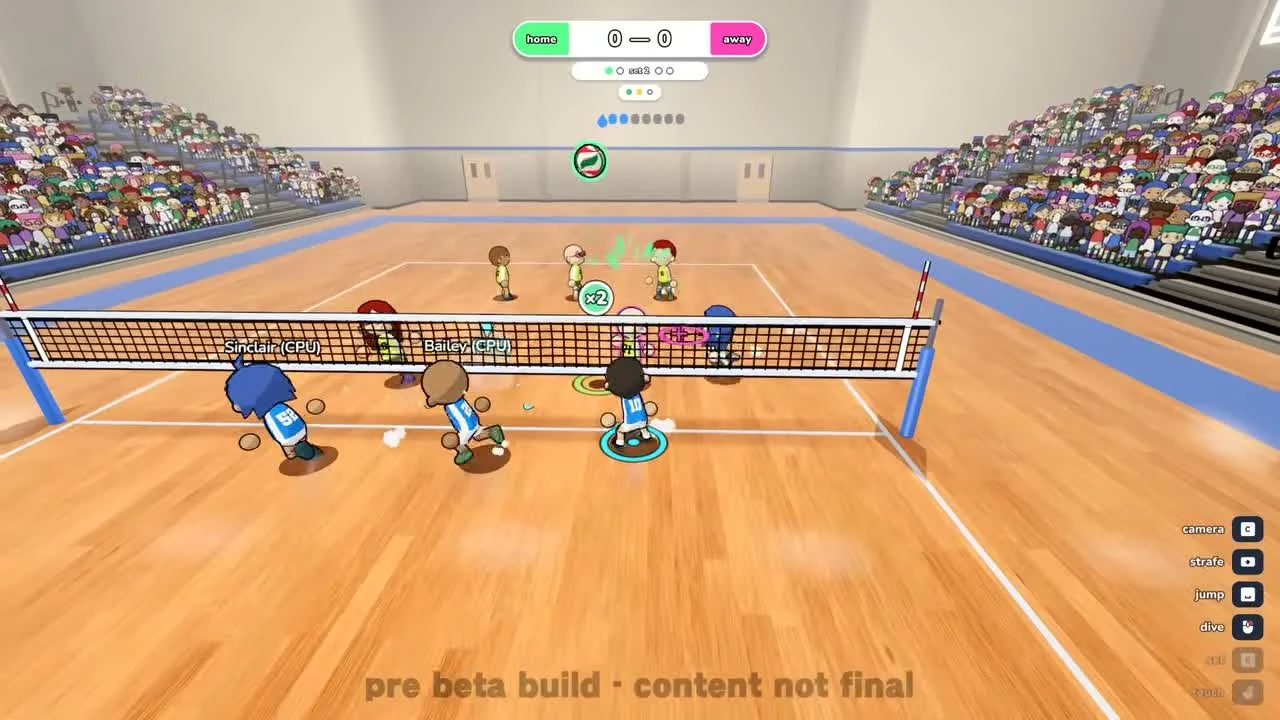
just volleyball Movement Guide: Strafing, Sprinting, BAM Jumps, and Stamina
Master court navigation in just volleyball with directional strafing, sprint momentum, bam jump timing, and stamina management.
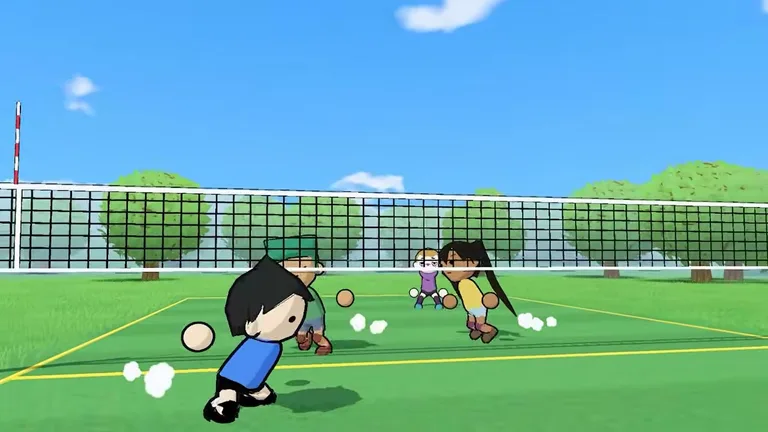
Fluid footwork and aerial timing form the backbone of competitive court positioning.
Master basic touch rules and player movement alongside core touch rules and beginner basics. For an overview of all gameplay actions, consult our comprehensive techniques guide.
Ground Movement and Strafe Mechanics
Standard movement allows players to reposition across the floor between rallies. Base running speed is rated at 5.9 for unassisted navigation across the court. Entering strafe cancels all horizontal momentum and instantly pivots player facing toward the cursor. Strafing movement operates at a speed rate of 0.88 while keeping the player locked toward the target reticle.
Positioning defensively at the baseline connects directly to defensive positioning and dives.
Sprinting Dynamics and Teammate Collisions
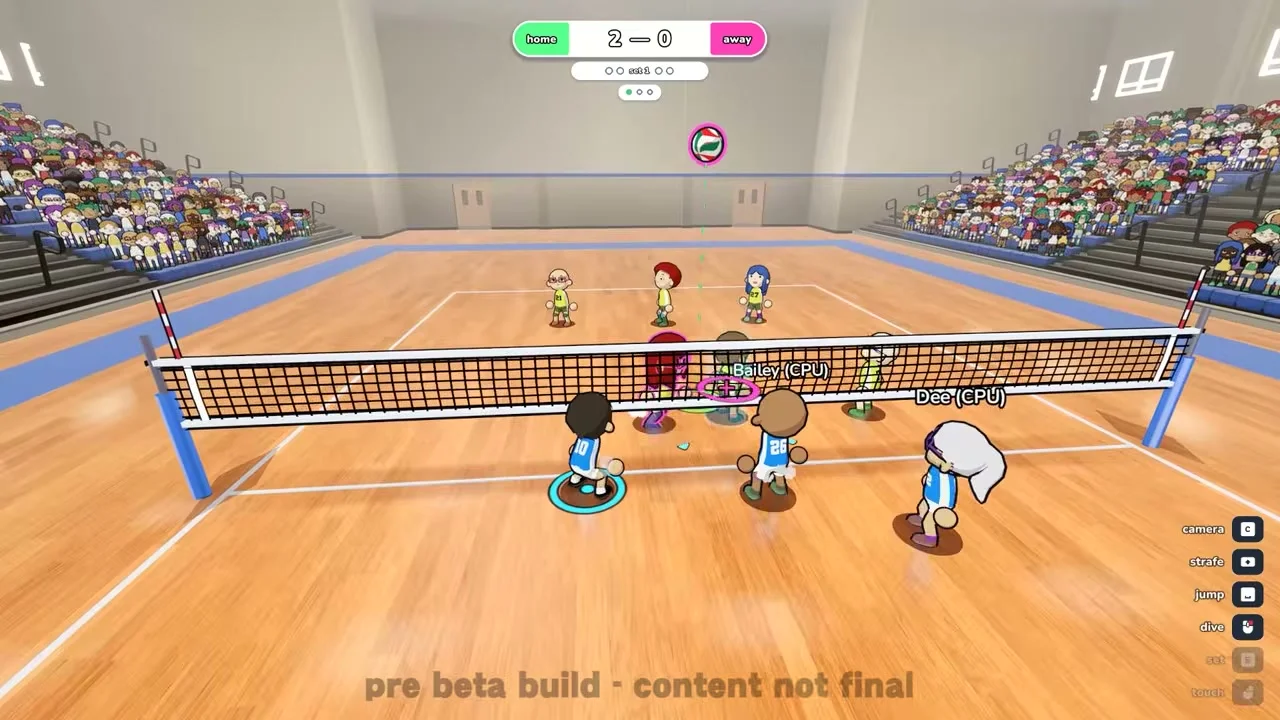
Quick bursts allow players to intercept fast-moving attacks or close down wide angles. Double tapping a direction or holding the sprint input boosts velocity to a sprint speed factor of 1.25. Players can collide into teammates during rapid defensive repositioning across the court. Landing on a teammate’s head knocks that player down to the floor for a brief duration.
Jump Charging and BAM Jump Execution
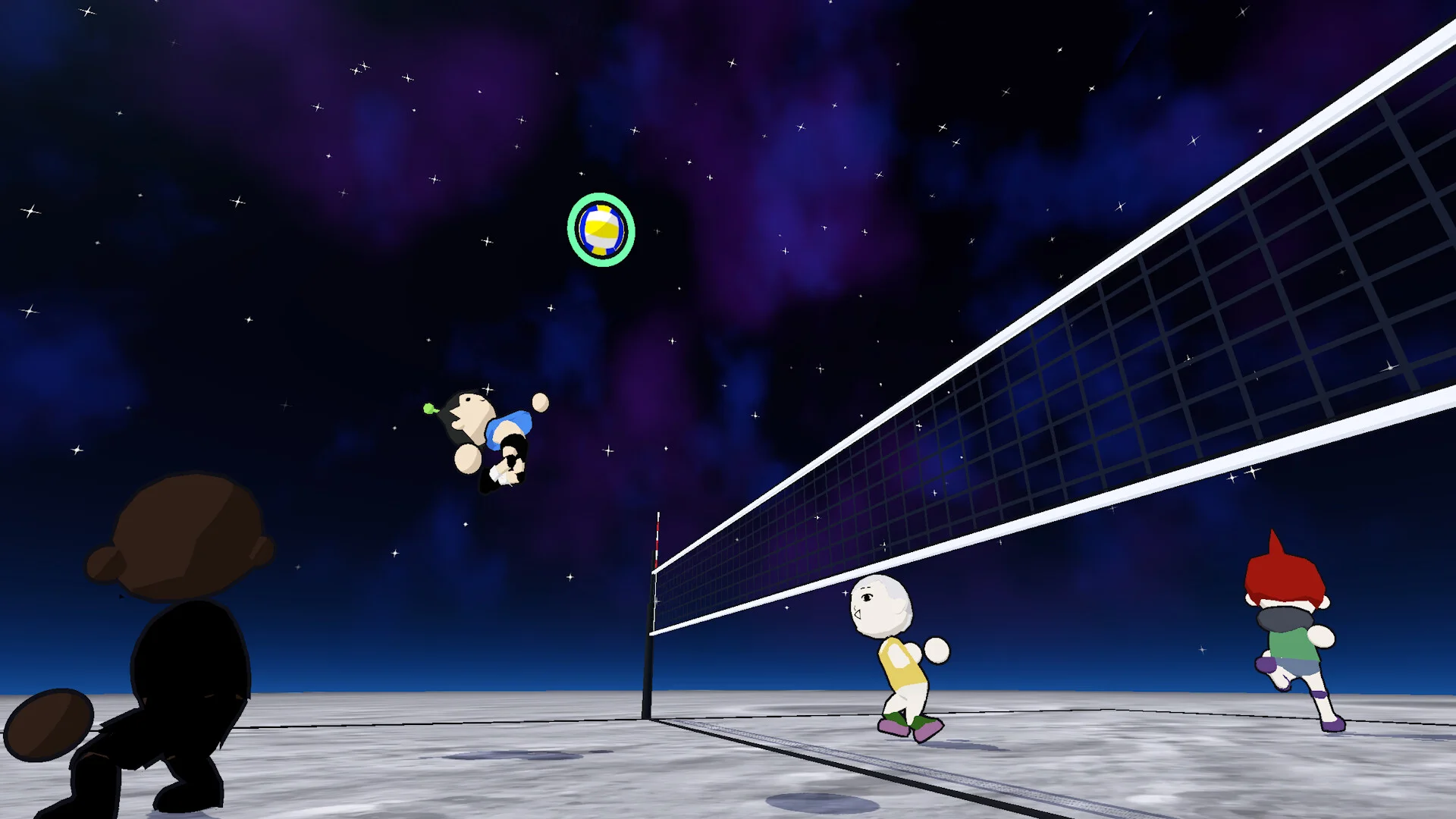
Aerial plays require disciplined vertical launch control. Tapping jump initiates low hops while holding the input charges higher vertical clearance. Holding a jump charge for too long causes stored launch energy to decay. Executing a bam jump multiplies vertical clearance by a jump multiplier of 1.28. Charging up a bam jump requires an initial charge delay of 0.7 seconds. The meter visual cue provides a flash lead time of 0.25 seconds before peak elevation. Players must release the jump input within an execution window of 0.2 seconds as the meter flashes white.
Jump elevation directly determines reach when timing net blocking mechanics.
Airborne Tilting and Trajectory Control
In-air body orientation alters attack trajectories, serves, and sets. Players can tilt airborne characters forward, backward, or sideways using directional inputs. Tilting forward produces flatter and faster spikes or converts close sets into setter dumps. Tilting backward creates higher floating arcs on attacks and turns jump serves into floaters. Tilting sideways applies lateral curve to the ball trajectory.
Airborne directional control enhances offensive attack angles covered in jump spiking techniques.
Stamina Gauge and Burnout Recovery
Energy conservation dictates sustained defensive and offensive pressure. The player energy meter is capped at a maximum stamina value of 100. Only sprinting and diving actions draw from the stamina pool. Continuous sprint exertion inflicts a stamina sprint drain of 36 units per second. Fully exhausting available energy forces the character into a burn out state. Triggering burnout incurs a recovery hold penalty of 0.5 seconds before stamina begins to replenish. Baseline stamina recovery restores energy at a rate of 13 units per second. Remaining stationary provides the quickest recovery, and fallen players remain grounded until stamina reaches approximately one third. Extended rallies activate the sweat mechanic where prolonged exchanges increase the likelihood of the ball slipping.