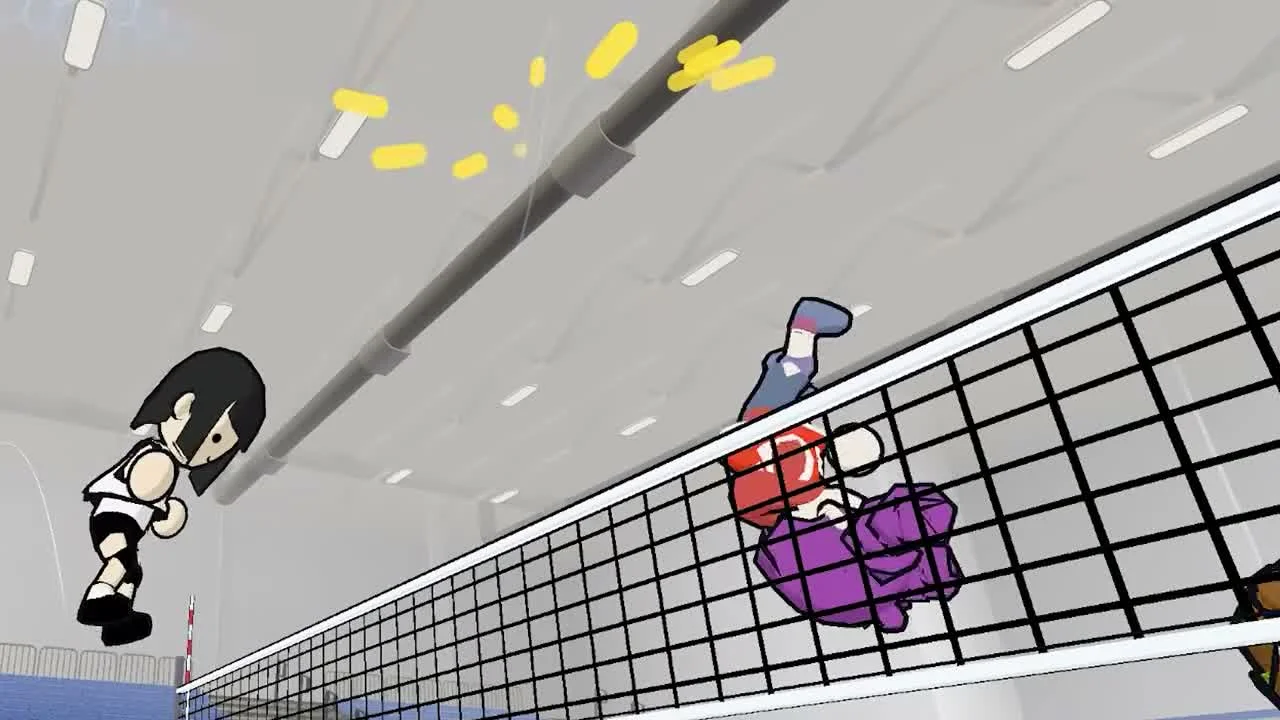
just volleyball Blocking Guide: Timing, Positioning, and Net Defense
Master net defense in just volleyball with jump timing, mid-air hand readjustment, and opponent positioning.
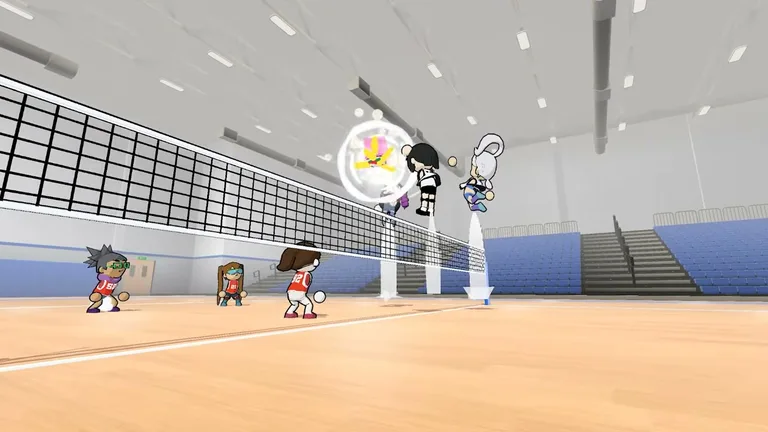
Effective front-row defense prevents opponent spikes from crossing the tape and converts defensive stops into immediate points.
Coordinate front-row defensive rotations with defensive positioning and dives. For a complete technical breakdown of all offensive and defensive mechanics, read our techniques guide.
Net Dimensions and Court Boundaries
Regulation play at the net is defined by fixed structural boundaries. The net height is set to 2.2 meters above the court surface. Lateral defense extends across the tape to the antenna half width of 4.5 meters.
Jump Mechanics and Mid-Air Adjustments
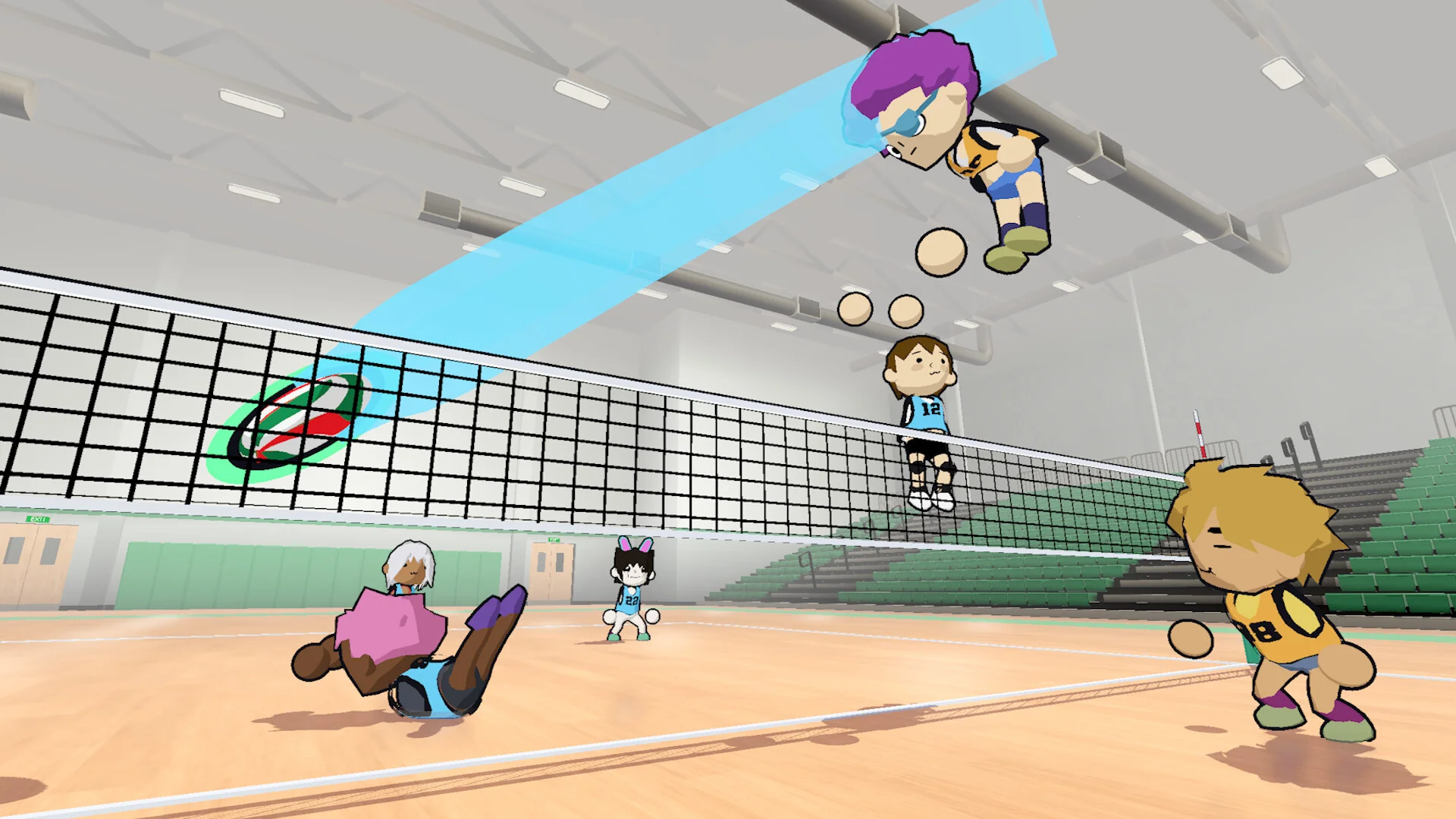
Blockers must establish elevation before presenting their hands. Defenders must first leap into the air before activating the block action. Once hands are raised at the net, players can reposition their reach once to the left or right in mid-air. Blockers can execute an angular turn adjustment of 2.0 while airborne to redirect defensive coverage.
Jump timing at the net works directly alongside jump spiking techniques.
Timing Windows and Hand Contact Zones
Precise jump timing dictates whether the ball rebounds downward or deflects out of play. The active defensive window allows 0.3 seconds to contest incoming attacks. Well-timed blocks drive the ball directly downward along the cursor aiming line. A fading ring around the aiming reticle signals degraded timing and weaker resistance. Late block attempts allow the incoming ball to travel along the original spike trajectory. Contacting the ball with the center of the hands produces a decisive kill block. Striking the outer tips or edges of the hands results in wipeouts and deflection tool errors.
Facing Hitters and Block Break Penalties
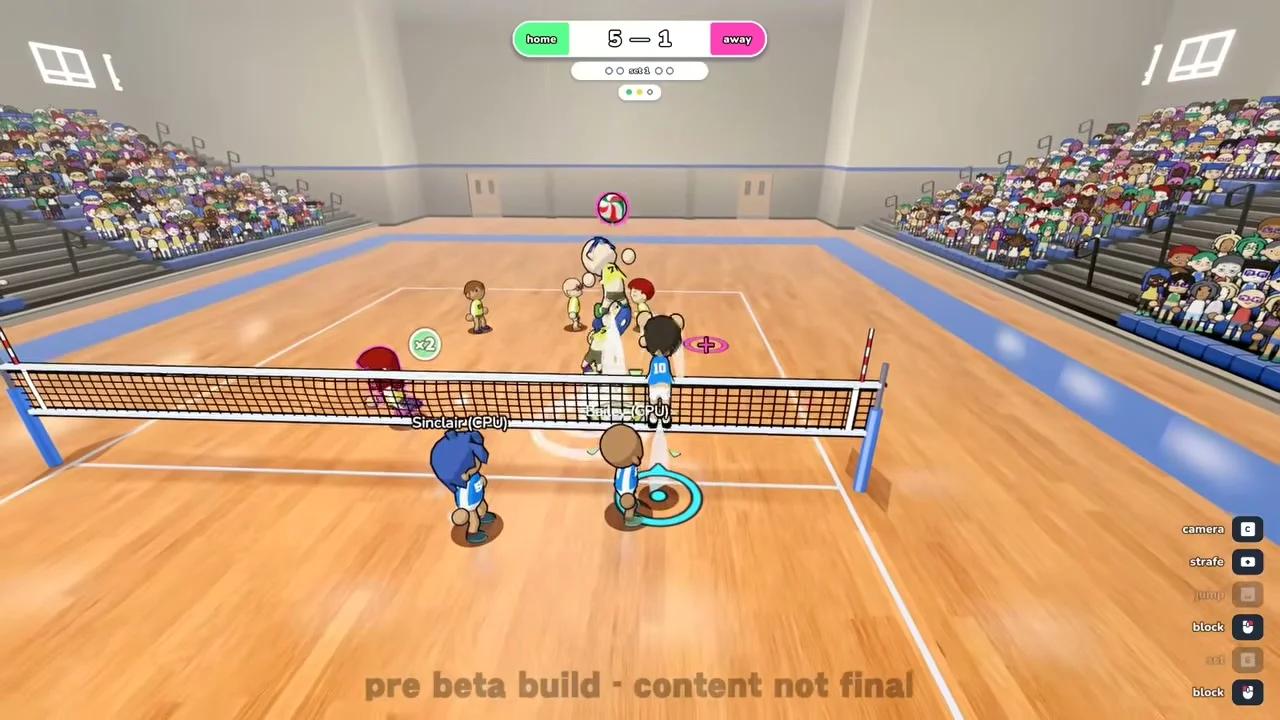
Body orientation prior to takeoff directly determines collision stability. Players must face the opposing hitter before initiating a jump. Defenders who turn away or jump late risk having powerful attacks shatter their defense and knock them flat. A failed defense that shatters under attack pressure triggers the in-game callout announcing “block broken!”.
Front-row court coverage relies on fundamentals explained in sprinting and jump mechanics.
Defensive Strategy and Net Mind Games
Front-row coverage extends beyond individual rejections. Strategic net defense shuts down preferred attacker angles and forces opponents into predictable cross shots. Net battles operate as psychological duels that dictate offensive options throughout a match.